Onno Jongewaard

Onno Jongewaard
Onno Jongewaard, geboren Den Haag 1945: Mijn kunstenaarschap heeft zich geleidelijk ontwikkeld, gelijk op met diverse beroepsuitoefeningen in verschillende sectoren van de maatschappij. Het oog voor schoonheid daarbij voortdurend in de aanslag, dat wel. De afschuw voor lelijkheid, verharding aangeboren aanwezig, net als de angst voor verstening van het hart.
Pas toen het mij duidelijk werd dat schoonheid niet vanzelf voorhanden is en vanzelfsprekend als streefdoel in de maatschappij neergelegd, kon het niet anders dan dat het zichtbaar maken van schoonheid, zachtzinnigheid, tederheid mijn hoofddoel werd. Dat moest om zelf aan die verharding, aan het collectief massief te kunnen ontsnappen. Ik moest het gestolde goud van het leven masseren, koesteren, ja uit diens benauwenis bevrijden. Het kunstenaarschap viel me als het ware ongevraagd ten deel, zonder dat er nog een mogelijkheid was er weerstand aan te bieden. Beeldhouwen werd mijn uitdrukkingswijze van deze in eerste instantie stille ambitie, die ik stilhield tot het vakmanschap voldoende was gerijpt.
Ik spreek nu over drie decennia terug. Aanvankelijk zocht ik het hardste materiaal, marmer en arduin steen, om er zachtheid uit te laten ontsnappen. Langzaam nam ik ook mijn toevlucht tot andere steensoorten maar ook hout en gips. Zo ontstond er een handschrift waarin het abstracte en het organische samen dansen. De bevrijde lijnen moeten ontroeren. Dat moet. Zij moeten de hardheid van het steen verheffen tot wat het zou kunnen zijn. Alsof wij zouden kunnen kijken in de ziel van het materiaal.
Ik werk bij voorkeur handmatig met hamer en beitel. Het lijfelijk contact met de steen staat in mijn beeldhouwer schap staat centraal.
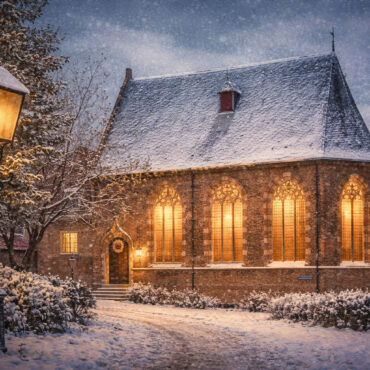
Beeldhouwer Onno Jongewaard heeft speciaal voor de tentoonstelling Zicht op Zeeland een unieke beeldentuin ingericht in de voormalige kloostertuin van de Engelse Kerk in Middelburg. In deze serene buitenruimte komen zijn abstracte, organisch gevormde sculpturen – veelal vervaardigd uit hardsteen – prachtig tot hun recht. De tuin biedt bezoekers een verstilde ontmoeting tussen kunst en natuur en vormt een bijzondere aanvulling op de tentoonstelling binnen in de kerk. Deze beeldentuin is vrij toegankelijk tijdens de expositieperiode en vormt een bijzondere aanvulling op de binnententoonstelling in de kerk.


Onno Jongewaard
Onno Jongewaard, born in The Hague in 1945: My artistry has developed gradually, alongside various professional roles in different sectors of society. Always with an eye for beauty at the ready, mind you. An innate abhorrence of ugliness and callousness, as well as a fear of the heart turning to stone.
Only when it became clear to me that beauty is not naturally available or established as a self-evident goal in society, did it become inevitable that making beauty, gentleness, and tenderness visible would become my primary objective. This was necessary to escape that callousness, that collective mass. I had to massage and cherish the solidified gold of life—yes, to liberate it from its confinement. Artistry fell to me, as it were, unbidden, without any possibility of offering resistance. Sculpting became my way of expressing this initially quiet ambition, which I kept silent until my craftsmanship had sufficiently matured.
I am speaking now of three decades ago. initially, I sought out the hardest materials, marble and bluestone, to let softness escape from them. Gradually, I also turned to other types of stone, as well as wood and plaster. Thus, a signature style emerged in which the abstract and the organic dance together. The liberated lines must move the viewer. They must. They must elevate the hardness of the stone to what it could be. As if we could look into the soul of the material.
I prefer to work by hand with a hammer and chisel. Physical contact with the stone is central to my work as a sculptor.
Sculptor Onno Jongewaard has created a unique sculpture garden in the former cloister garden of the English Church in Middelburg, specifically for the exhibition Zicht op Zeeland. In this serene outdoor space, his abstract, organically shaped sculptures—mostly crafted from bluestone—are showcased to their full potential. The garden offers visitors a tranquil encounter between art and nature and serves as a special addition to the exhibition inside the church. This sculpture garden is free to access during the exhibition period and forms a special addition to the indoor exhibition in the church.